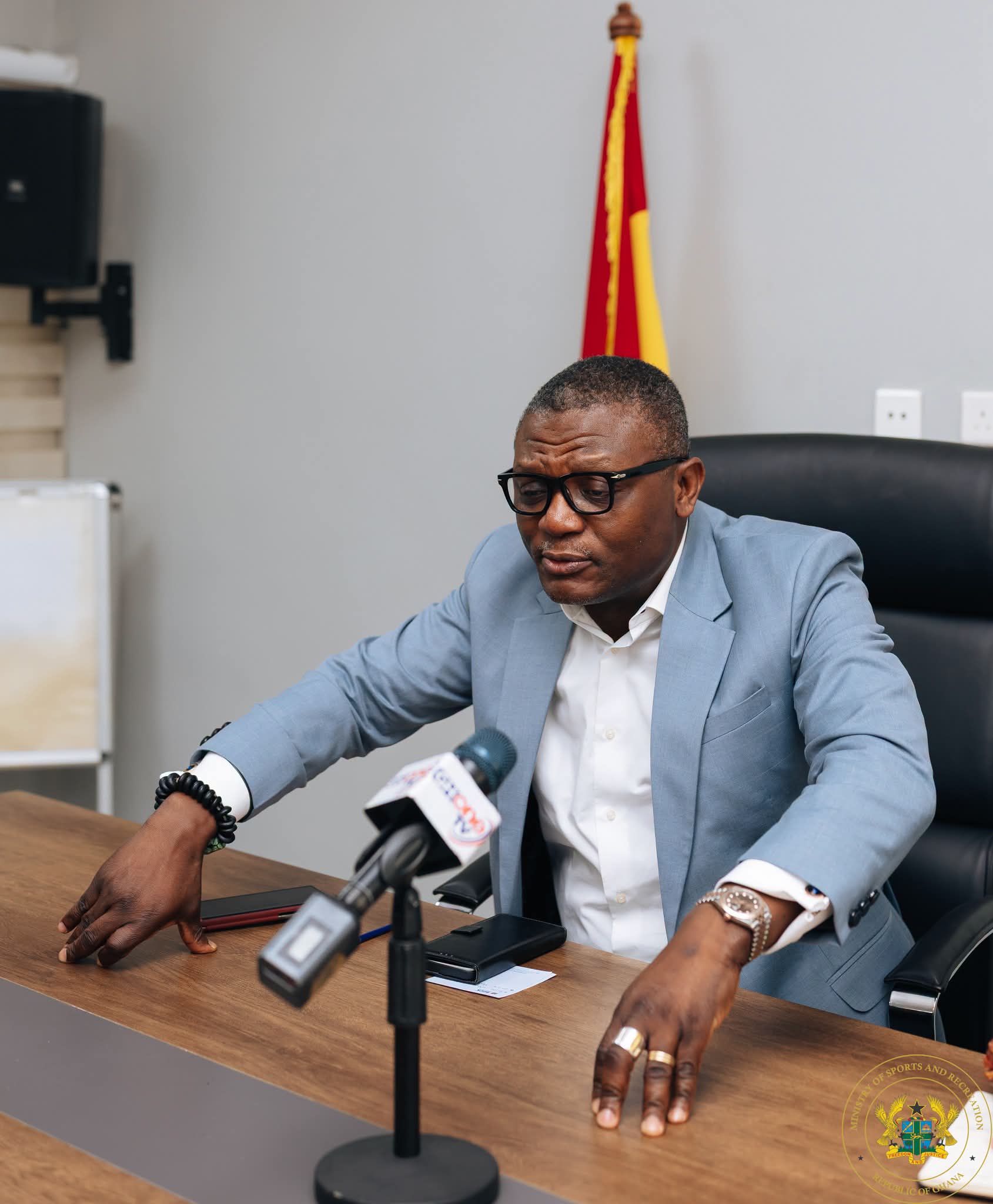
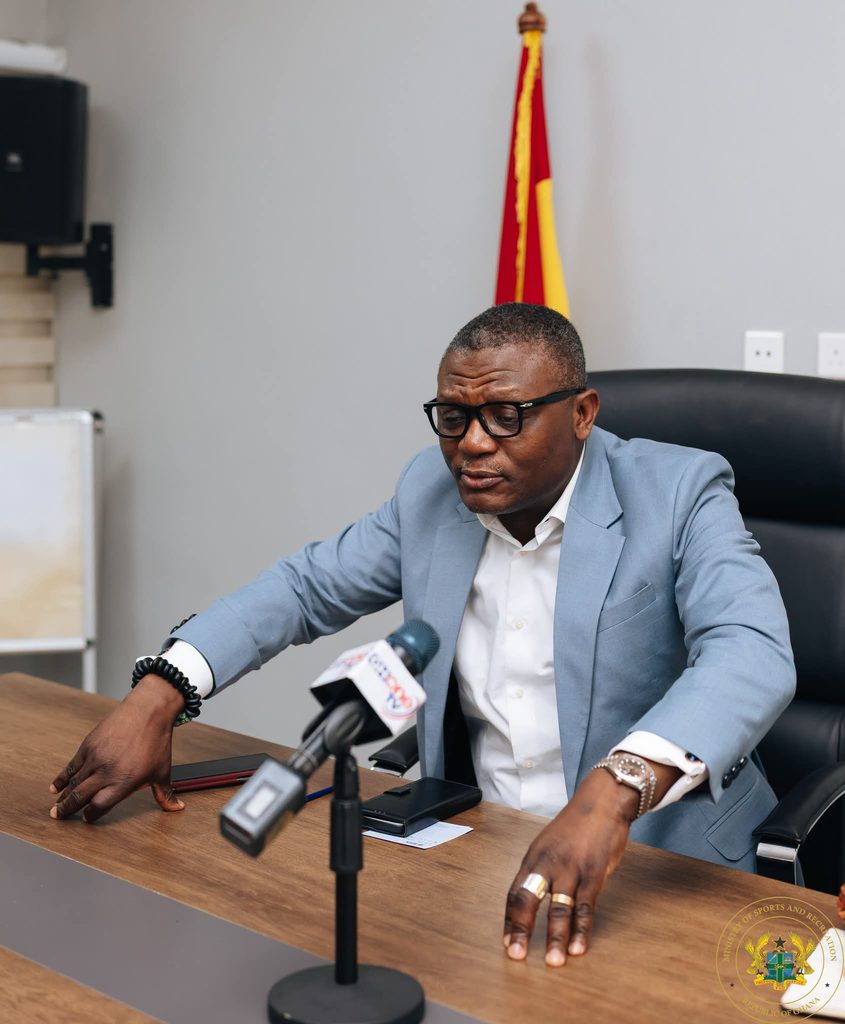
The Minister for Sports and Recreation Kofi Iddie Adams has called for a fundamental shift in the way government funding to football clubs is managed, insisting that financial support must produce lasting transformation rather than merely finance another football season.
Speaking at the 32nd Ordinary Congress of the Ghana Football Association (GFA) at the GFA Secretariat, Soccerman Centre of Excellence, Prampram, on Thursday, August 20, 2026, the Minister said government could not continue to invest in clubs year after year without seeing measurable improvements in their structures, operations and ability to generate sustainable revenue.
“That investment entered the club season, and the institution looks exactly the same at the end. Then what we did was that we financed the season and not transformation,” he said. He stressed that every financial intervention into football should be viewed as an investment capable of creating new value and strengthening the long-term sustainability of clubs.
The Minister further challenged football administrators to demonstrate the economic returns generated from public investment in the sport. “For every cedi we help put into football, how much new value does that football itself generate?” he asked, arguing that available research indicates that sports investment can generate significant economic returns when properly planned and managed.
According to him, the potential economic benefits of football make a strong case for increased investment in the sport, but the sector must be organised in a way that produces tangible results. “There is something good in investing in sports, especially football. So, let’s carry it through and let’s begin to see that,” he said.
He explained that demonstrating measurable returns would also make it easier for the football authorities to attract corporate sponsorship and convince businesses to increase their investment in the game. “Next time we approach the corporates to come on board, we have something to demonstrate and to be able to invite them to increase this add-on,” the Minister noted.
The Minister also challenged football stakeholders to take greater responsibility for improving the match-day experience and making domestic football attractive to supporters. He rejected the notion that fans simply owe their money to football, arguing instead that the sport must earn their attention through quality, excitement and a compelling environment.
“Supporters do not owe football their money. No. They don’t. Football earns their attention,” he stressed, calling on clubs, the GFA, the media and other stakeholders to work together to create an atmosphere that encourages supporters to travel and follow their teams.
Drawing on an experience from a previous international tournament, the Minister said supporters can develop a strong attachment to football when the right environment is created. He recalled an encounter with fans after Ghana’s Round of 32 game in Kansas, where supporters expressed their desire to follow the tournament wherever it was held next.
“Do we have that kind of environment? We need to create it. It can appear as magic, but it has to be created,” he said, emphasising that building a vibrant football culture would require collective effort.
The Minister further warned that Ghana’s domestic league is competing for the attention of fans against powerful entertainment alternatives, including the English Premier League, the Championship, TikTok, streaming platforms, gaming and other content available on mobile phones.
“Don’t think you are alone. That is why you must do things to attract,” he cautioned, using the example of a butterfly and flowers to illustrate his point. “Have you seen any butterfly move to any plant without flowers or fruit? So you need to create something to attract them. They don’t owe you. We actually have a responsibility towards them.”
He therefore urged the GFA, clubs, players, media and other football stakeholders to collectively rethink how the domestic game is packaged, marketed and delivered to supporters, describing the need as a form of “reverse osmosis” in which the football industry must actively draw supporters back into the stadiums.
The Minister’s remarks come at a time when discussions around sustainable financing, commercialisation and improved fan engagement remain central to the future of Ghanaian football, with stakeholders being encouraged to move beyond simply funding competitions and instead build institutions capable of creating lasting economic and sporting value.
By: Victoria Kwofie


