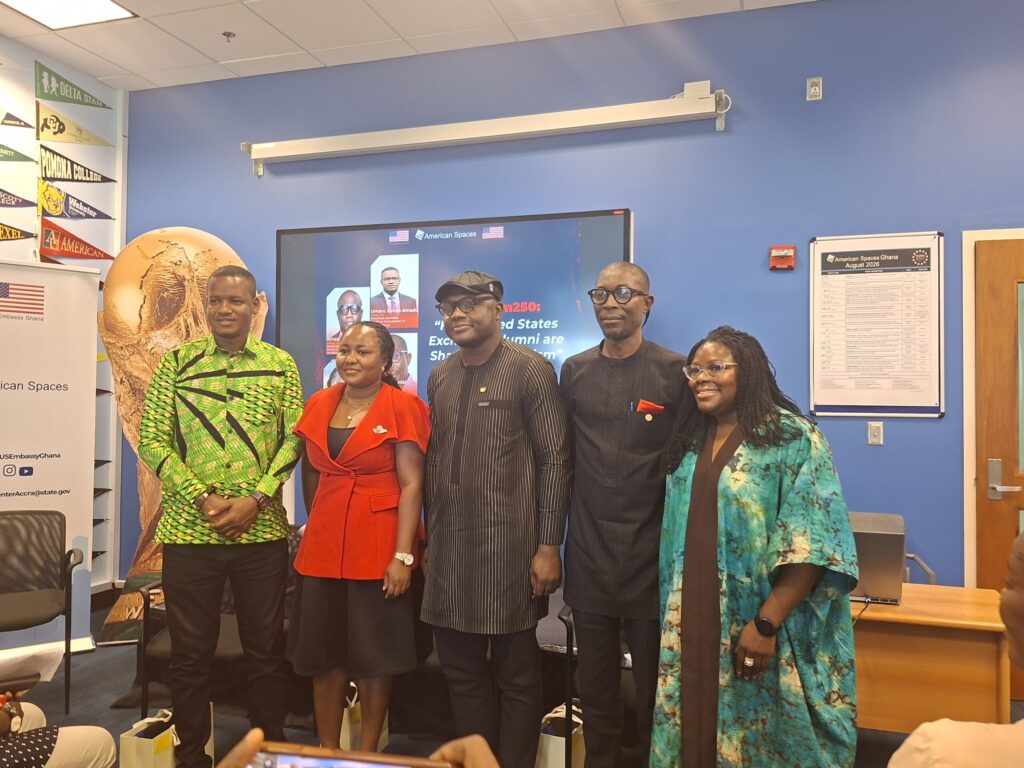
The U.S. Embassy in Ghana, through its American Spaces programme, brought together emerging and practising journalists for a programme on how beneficiaries of United States exchange programmes are shaping journalism in Ghana on 26th August, 2026.
Held under the theme; “How United States Exchanges Alumni are Shaping Journalism,” the programme featured seasoned journalists and media professionals who have benefited from U.S. exchange programmes. They included Umaru Sanda Amadu, news anchor and host at Citi FM and Channel One TV, Alfred Ocansey of Media General, and Cecil Nii Obodai Wentum, Acting Director of the Public Affairs Division at the Ghana Highway Authority. The discussion was moderated by Doreen Ampofo, Chief Editor at the Ghana Broadcasting Corporation and also a beneficiary of a U.S. exchange programme.
Welcoming participants, Mr. Matthew Asada, Acting Public Affairs Officer of the Public Diplomacy Section at the U.S. Embassy, described the programme as an example of public diplomacy in action, bringing together the American Center, the media and alumni of U.S. exchange programmes. “Freedom of speech is so essential for American and Ghanaian society,” he said, stressing the importance of protecting free expression while examining issues including censorship, media regulation and the role of public and private organisations in the media space.
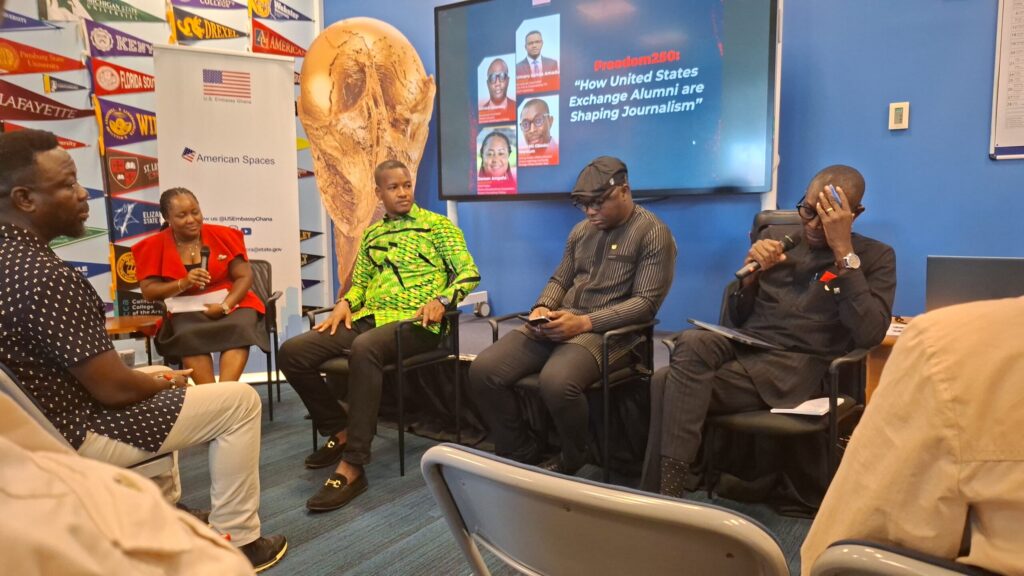
Alfred Ocansey, reflecting on his three-month U.S. exchange experience, said the programme combined classroom learning with practical newsroom experience, exposing participants to different media environments and journalists from across the world. “What really struck me was the same press freedom that we were talking about,” he said, recounting discussions with journalists from countries where press freedom was more restricted. He said the experience broadened his understanding of the relationship between press freedom and national development.
“Sharing experiences with journalists from different countries made me appreciate the freedoms we have in Ghana,” Ocansey added. He noted that while Ghana faces its own challenges, journalists can operate with considerably more freedom than in some other countries, where media workers face intimidation, arrest or strict state control. He said the exchange also gave him valuable insight into different approaches to media practice and public service.
Umaru Sanda Amadu said his exchange programme exposed him to journalists from Africa, Europe and Asia and gave him a deeper appreciation of the freedom Ghanaian journalists enjoy. “Recalling interactions with colleagues who shared experiences of arrests and other difficulties encountered in the course of journalism. He said the programme was an eye-opening experience that challenged him to value Ghana’s media freedoms.
Umaru also said the programme helped him understand that press freedom is a privilege that should not be taken for granted. Drawing on the legacy of American journalist Edward R. Murrow and the history of journalism in the United States, he said the experience demonstrated the sacrifices made to establish the freedoms journalists enjoy today. “Free speech, as we have it here, is a very prized commodity elsewhere,” he said, urging journalists to cherish and protect it.
Cecil Nii Obodai Wentum said his exchange experience reinforced his belief that journalism is more than a profession because it carries a responsibility to the public. “Journalism is not just a title, it’s public service,” he said, urging journalists to prioritise accuracy and responsibility, particularly in an era of citizen journalism and social media. He said journalists must not sacrifice accuracy for speed as traditional media increasingly rely on content generated through platforms such as WhatsApp and X.
Wentum further highlighted political tolerance as another lesson he brought home from the exchange programme, saying journalists and citizens should be able to disagree without turning their differences into conflict. “Tolerance is key, and it was one thing I brought back home,” he said.

The programme also provided participants with an opportunity to network with the speakers and engage with other beneficiaries before a group photograph.
By: Victoria Kwofie